
Role of Compound Pharmacies in Modern Telehealth

Updated: Apr 2

Over 30 million American patients rely on specialized medications each year, yet most standard prescriptions cannot address every individual health need. When off-the-shelf solutions fall short, many people turn to compound pharmacies for personalized approaches. Understanding how these facilities craft custom medications can help you make informed decisions about your care, safety, and treatment choices.
Table of Contents
Key Takeaways
Point | Details |
Personalized Medications | Compound pharmacies create customized medications to meet specific patient needs that standard pharmaceuticals cannot address. |
Safety Protocols | Rigorous safety and quality standards are essential to prevent contamination and ensure accurate formulations in compound pharmacies. |
Regulatory Compliance | Compound pharmacies operate under unique regulations ensuring accountability for medication quality and patient safety. |
Cost Considerations | Patients should be aware that compounded medications may have higher out-of-pocket costs and are often not covered by insurance. |
Defining Compound Pharmacies and Their Purpose
Compound pharmacies represent a specialized segment of pharmacy practice dedicated to creating personalized medication solutions that go beyond standard pharmaceutical manufacturing. These sophisticated medical facilities craft customized medications tailored to individual patient requirements, addressing unique medical needs that commercial pharmaceutical products cannot accommodate.
The primary function of compound pharmacies involves meticulously preparing medications by altering ingredients, dosages, or forms to meet specific patient needs. This process allows healthcare providers to develop precise treatment approaches for patients who cannot use standard commercially available medications. For instance, patients might require medications without certain allergens, need alternative dosage strengths, or necessitate different medication delivery methods like liquid suspensions for those struggling with swallowing pills.
Compound pharmacies serve critical roles in various medical scenarios. These specialized facilities create customized medications for patients who cannot be treated with FDA-approved drugs, particularly those with specific medical constraints. Common scenarios include developing medications without specific preservatives, creating unique dosage combinations, or formulating drugs in child-friendly or senior-appropriate formats. The pharmacists working in these facilities possess advanced training in pharmaceutical chemistry, enabling them to precisely manipulate medication compositions to meet intricate patient requirements.
Pro Tip: When considering a compounded medication, always verify the pharmacy’s certification and discuss potential customization options thoroughly with your healthcare provider to ensure the most effective treatment approach.
Types of Compounded Medications Provided
Compounded medications represent a versatile approach to pharmaceutical customization, offering patients tailored treatment solutions across multiple medical domains. These specialized medications encompass a wide range of forms designed to address individual patient requirements, providing healthcare providers unprecedented flexibility in treatment strategies.
The spectrum of compounded medications includes several critical categories. Oral formulations are particularly prominent, with options ranging from flavored liquid suspensions for pediatric patients to precisely dosed capsules for individuals needing specific medication strengths. Topical preparations like customized creams and transdermal medications allow targeted treatments for dermatological conditions, pain management, and hormone therapies. Compounded medications also extend to injectable solutions, suppositories, and specialized eye drops that meet unique patient needs.

Specialized compounded medication types address complex medical scenarios that standard pharmaceutical products cannot resolve. These include allergen-free formulations for patients with specific sensitivities, medications without problematic preservatives, alternative dosage forms for patients with swallowing difficulties, and precisely calibrated hormone replacement therapies. Pediatric and geriatric patients particularly benefit from these customized approaches, which allow medication adaptation to specific age-related requirements.
Here’s a summary of common types of compounded medications and their main applications:
Medication Type | Typical Use Cases | Unique Benefits |
Oral suspensions | Pediatrics, difficulty swallowing pills | Easier dosing and administration |
Topical creams/ointments | Dermatology, pain management | Targeted local therapy |
Injectable solutions | Hormone therapies, pain, severe illness | Immediate systemic effect |
Suppositories | GI issues, rectal/vaginal therapies | Alternative for oral intolerant |
Customized eye drops | Ophthalmic disorders | Individual dosing requirements |
Pro Tip: Always consult with your healthcare provider about potential compounded medication options, as these personalized treatments can offer more precise and effective therapeutic solutions tailored to your specific medical profile.
How Compound Pharmacies Operate Safely
Safety protocols form the cornerstone of compound pharmacy operations, ensuring patients receive precisely formulated medications without compromising health standards. Compounding pharmacies adhere to rigorous quality standards designed to prevent contamination and guarantee accurate ingredient composition, implementing multilayered verification processes that protect patient well-being.
The operational framework of compound pharmacies involves complex regulatory oversight and professional standards. Licensed pharmacists prepare medications based on valid prescriptions, following strict regulations and quality guidelines established by state pharmacy boards and national healthcare organizations. These professionals undergo specialized training to understand precise compounding techniques, sterility requirements, and ingredient interactions, ensuring each customized medication meets exacting safety benchmarks.
Sterile compounding represents a particularly critical aspect of pharmacy safety, especially for injectable and respiratory medications. Advanced facilities employ specialized clean rooms with controlled environmental conditions, utilizing laminar airflow systems, protective equipment, and meticulous sterilization protocols. Pharmacists must maintain extraordinary attention to detail, performing precise measurements, maintaining strict infection control standards, and continuously monitoring preparation environments to minimize potential contamination risks.
Pro Tip: Always request documentation of your compound pharmacy’s certification and quality control procedures, and don’t hesitate to ask your healthcare provider about the specific safety measures implemented during medication preparation.
Legal Regulations and FDA Oversight
Regulatory compliance represents a critical foundation for compound pharmacies, ensuring patient safety and medication quality through comprehensive legal frameworks. Compounded drugs operate under unique regulatory guidelines that differ significantly from standard FDA-approved pharmaceutical products, creating a nuanced oversight mechanism that balances innovation with patient protection.
The Drug Quality and Security Act established a groundbreaking framework for regulating human drug compounding facilities, introducing a new category of regulated entities called outsourcing facilities. This legislative milestone transformed the compounding pharmacy landscape by creating structured federal oversight mechanisms. State pharmacy boards maintain primary regulatory responsibility, while the FDA provides additional layers of scrutiny, particularly for large-scale compounding operations that distribute medications across multiple jurisdictions.
Complex regulatory requirements mandate rigorous documentation, quality control processes, and ongoing compliance monitoring. Compounding pharmacies must maintain meticulous records of ingredient sourcing, preparation protocols, and batch testing results. Professional pharmacists undergo continuous training to understand evolving regulatory standards, ensuring each customized medication meets stringent safety and efficacy benchmarks. These comprehensive guidelines protect patients by establishing clear accountability and maintaining high standards of pharmaceutical preparation.
Pro Tip: Always verify a compound pharmacy’s current regulatory certifications and ask about their specific quality assurance processes to ensure you’re receiving the highest standard of personalized medication preparation.
Benefits for Telemedicine and Personalized Care
Personalized medication solutions represent a transformative approach to healthcare delivery, particularly within the evolving landscape of telemedicine. Compounded medications offer unprecedented flexibility by tailoring treatments to individual patient requirements, enabling healthcare providers to address complex medical needs through precise, customized interventions.
Telemedicine platforms dramatically enhance patient care by leveraging compounding pharmacies’ ability to adjust dosages, forms, and ingredients for unique medical scenarios. Patients with specific allergies, sensitivities, or unusual medical conditions can now receive precisely formulated medications without traditional geographical or logistical constraints. This approach proves especially valuable for individuals requiring specialized treatments that standard pharmaceutical products cannot adequately address, such as patients needing specific hormone dosages, pediatric patients requiring liquid medication formats, or individuals with rare allergic sensitivities.
The synergy between telemedicine and compound pharmacies creates a comprehensive healthcare ecosystem that prioritizes individual patient needs. By eliminating geographical barriers, these integrated services enable patients to consult healthcare professionals remotely while simultaneously receiving meticulously crafted, personalized medications. Advanced digital platforms facilitate seamless communication between healthcare providers, patients, and compound pharmacies, ensuring precise medication preparation and delivery that meets exact patient specifications.
Pro Tip: When exploring telemedicine services, always discuss potential compounded medication options with your healthcare provider to understand how personalized treatments can more effectively address your specific health requirements.
Risks, Costs, and Comparing Alternatives
Pharmaceutical customization comes with important considerations that patients must carefully evaluate. Compounded medications present unique risks, as they are not FDA-approved and may potentially involve challenges such as contamination or incorrect dosing, requiring patients to exercise due diligence when selecting a compound pharmacy.
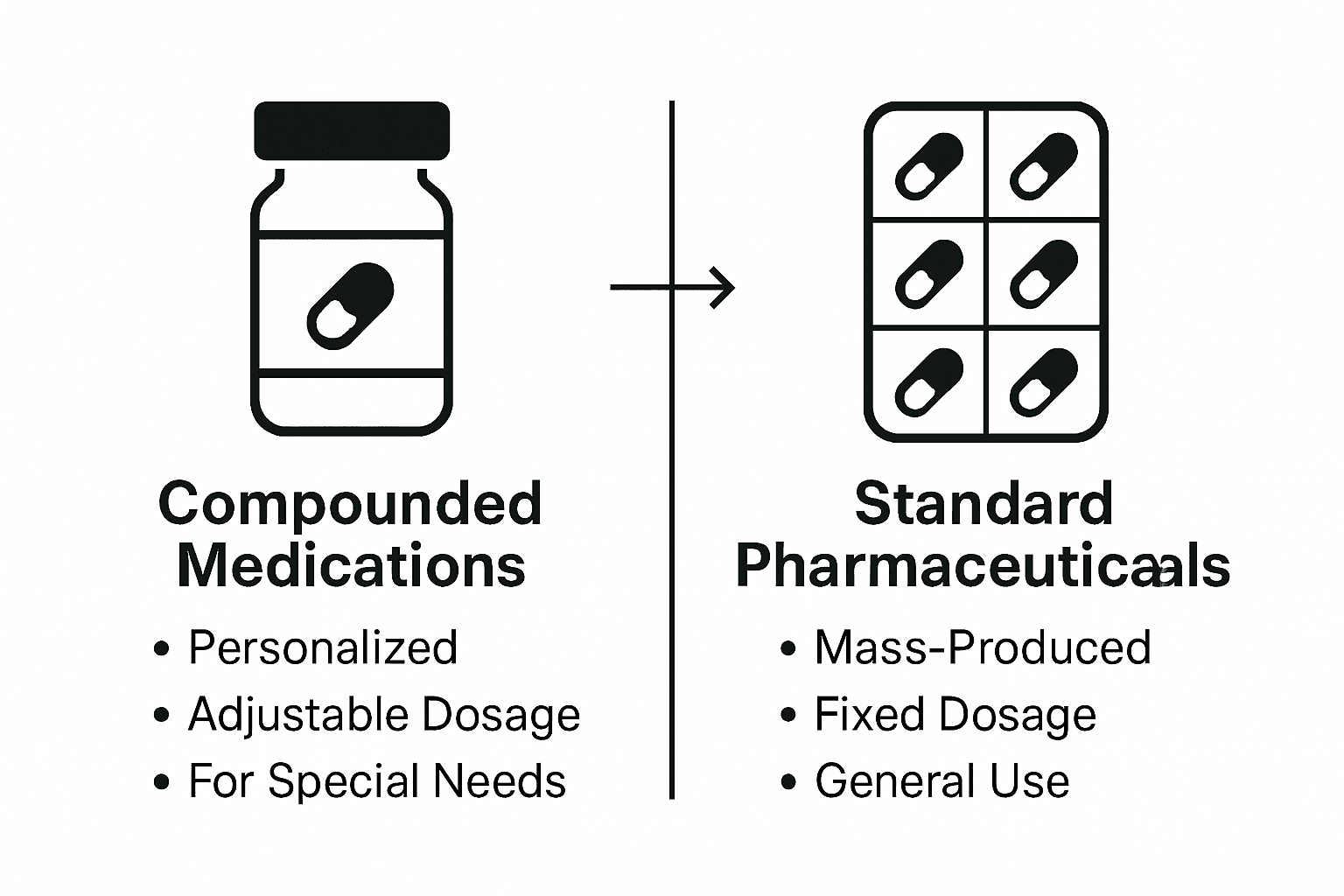
Financial implications represent another critical aspect of choosing compounded medications. Patients should anticipate potential higher out-of-pocket expenses, as these specialized treatments are frequently not covered by standard insurance plans. The pricing can vary significantly depending on the complexity of medication preparation, specific ingredient requirements, and the level of customization needed. Comparative analysis with traditional pharmaceutical options becomes essential, requiring patients to weigh potential therapeutic benefits against additional financial investments.
Alternative treatment strategies provide important context when considering compounded medications. Standard pharmaceutical products often represent more economical and widely available options, with established efficacy and extensive clinical research. However, for patients with specific medical conditions, allergies, or unique physiological requirements, compounded medications might offer the only viable treatment pathway. Healthcare providers play a crucial role in guiding patients through this decision-making process, helping them understand the nuanced trade-offs between conventional and personalized medication approaches.
This table compares compounded medications to standard pharmaceuticals in key areas:
Aspect | Compounded Medications | Standard Pharmaceuticals |
FDA Approval | Not individually approved | Approved and regulated |
Personalization | Fully customized for individuals | One-size-fits-most approach |
Insurance Coverage | Rarely covered | Commonly covered |
Risk of Contamination | Higher, requires strict protocols | Low, mass-produced standards |
Accessibility | Requires prescription and specialty | Widely available in pharmacies |
Pro Tip: Always conduct a comprehensive cost-benefit analysis with your healthcare provider, reviewing insurance coverage, potential out-of-pocket expenses, and long-term treatment effectiveness before committing to compounded medication solutions.
Discover Personalized Telehealth Solutions with Guppy Meds
The article highlights the growing need for precise, safe, and personalized medications in telemedicine, addressing challenges such as unique health conditions, allergies, and dosage requirements that commercial drugs cannot solve. Compound pharmacies play a vital role in this modern healthcare landscape by providing customized formulations that empower patients and providers alike. If you seek convenience without compromising quality or safety, tailored treatment plans can transform your health journey.
At Guppy Meds, we understand these challenges and specialize in delivering prescription medications directly to your door through an FDA-registered compound pharmacy. Whether you are interested in advanced weight management options like Weight Loss GLP-1’s | Guppy Meds or exploring a range of personalized therapies available in our All Products | Guppy Meds category, we combine telehealth innovation with expert pharmaceutical care.
Take control of your health today by choosing a platform that offers privacy, simplicity, and expert-driven personalized medications. Visit Guppy Meds now to schedule your virtual consultation and start your tailored treatment plan with trusted compounded medication solutions designed just for you.
Frequently Asked Questions
What are compound pharmacies and their role in telehealth?
Compound pharmacies specialize in creating personalized medications tailored to individual patient needs. In the context of telehealth, they enhance treatment flexibility by allowing healthcare providers to customize dosages, forms, and ingredients based on specific medical scenarios.
How do compounded medications benefit patients using telemedicine?
Compounded medications provide significant benefits by accommodating patients with unique needs, such as allergies or specific dosage requirements. Telemedicine facilitates consultations between patients and healthcare providers, allowing for the seamless creation and delivery of these tailored medications.
What precautions should I take when using compounded medications?
When considering compounded medications, it is essential to verify the pharmacy’s certifications, discuss potential customization options with your healthcare provider, and ensure adherence to safety protocols to minimize risks such as contamination or incorrect dosing.
Are compounded medications covered by insurance?
Compounded medications often present higher out-of-pocket expenses as they are frequently not covered by standard insurance plans. Patients should evaluate potential costs and compare these with standard pharmaceutical options to make informed decisions.
Recommended


Comments