
Role of Telehealth in Medicine: Convenience Meets Care


Over half of American professionals say packed schedules keep them from prioritizing health. When long work hours make traditional appointments tough to arrange, telehealth steps in with flexible, private care. Digital platforms now deliver prescription services right to your door, supporting weight management and sexual health needs. This article clears up common telehealth myths, details how remote healthcare actually works, and explains why more American adults are choosing expert medical support without leaving home.
Table of Contents
Key Takeaways
Point | Details |
Telehealth encompasses diverse services | Beyond video consultations, telehealth includes remote diagnostics, chronic condition monitoring, and specialized care coordination. |
Telehealth is effective and reliable | Statistical analysis indicates that telemedicine provides high-quality medical assessments across various demographics. |
Regulations enhance patient safety | State-level telehealth regulations focus on provider licensing and privacy protections, ensuring quality remote healthcare delivery. |
Cost-effective alternative to in-person care | Research shows telehealth visits can cost 30-40% less than traditional appointments, offering significant savings for patients. |
Defining Telehealth and Common Myths
Telehealth represents a transformative approach to healthcare delivery that utilizes digital technologies to connect patients with medical professionals remotely. Telemedicine’s scope extends far beyond traditional healthcare settings, enabling comprehensive medical services through electronic communication platforms.
Unlike common misconceptions, telehealth isn’t just video consultations. It encompasses a wide range of services including remote diagnostics, prescription management, chronic condition monitoring, and specialized care coordination. The CDC’s research highlights that telehealth adoption has dramatically increased, particularly during the COVID-19 pandemic, demonstrating its effectiveness in addressing healthcare access challenges.
Several persistent myths continue to surround telehealth. Many individuals believe remote healthcare is less comprehensive or reliable compared to in-person visits. However, statistical analysis shows telemedicine’s utility across diverse demographic groups, with licensed healthcare providers delivering high-quality medical assessments and treatment plans through secure digital platforms. Telehealth services can efficiently manage numerous medical conditions, from sexual health consultations to weight management programs.
Pro tip: Always verify that your telehealth provider is licensed, uses secure communication channels, and offers comprehensive medical evaluations to ensure you receive professional and confidential care.
Key Types of Telehealth Services
Telehealth services represent a diverse array of digital healthcare delivery methods designed to improve patient access and convenience. Congressional research identifies multiple modalities of telehealth service delivery, each serving unique medical communication and treatment needs. These sophisticated digital platforms enable healthcare professionals to provide comprehensive medical support without traditional in-person constraints.
The primary types of telehealth services include synchronous and asynchronous communication models. Synchronous telehealth involves real-time interactions through video consultations or telephone appointments, allowing immediate medical assessment and consultation. Asynchronous telehealth, alternatively known as store-and-forward technology, enables patients to transmit medical information like images, test results, or health records for later review by healthcare providers. Remote patient monitoring represents another critical telehealth service, utilizing technological devices to track patients’ health metrics, particularly beneficial for managing chronic conditions and providing continuous healthcare oversight.
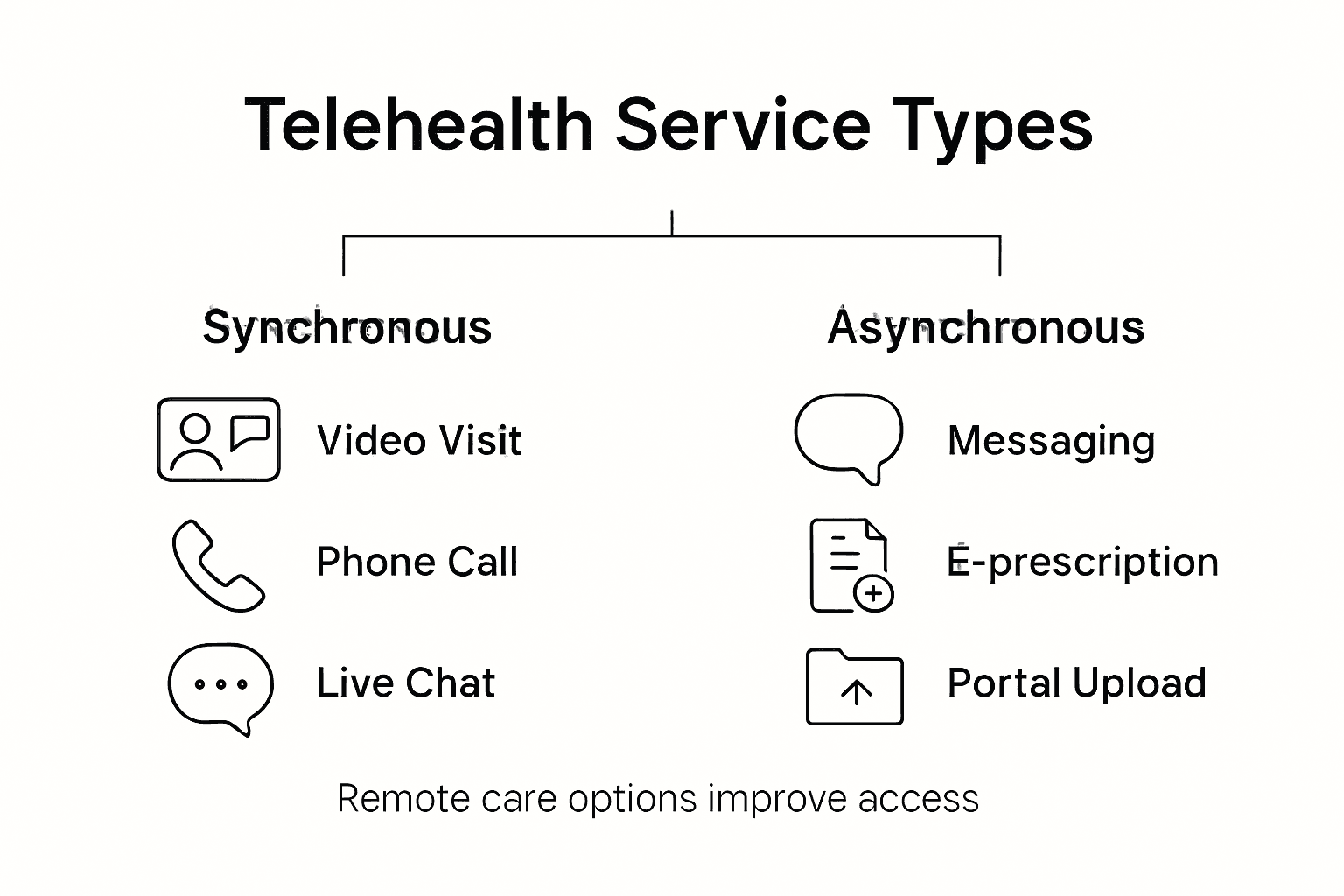
Telehealth services extend across numerous medical specialties, including but not limited to sexual health, men’s health, weight management, behavioral health, and preventive care. These digital platforms support specialized consultations, prescription management, diagnostic evaluations, and follow-up care. Sexual health telemedicine has emerged as a particularly significant telehealth domain, offering confidential and accessible medical support for individuals seeking discrete healthcare solutions.
Summary of major telehealth service types and their primary advantages:
Service Type | How It Works | Primary Advantage |
Synchronous | Live video or phone consultations | Immediate expert response |
Asynchronous | Messages, images sent for review | Flexible scheduling options |
Remote Monitoring | Devices track health remotely | Continuous condition oversight |
Pro tip: When exploring telehealth services, confirm the provider’s technological infrastructure, ensure they offer comprehensive service types, and verify their ability to handle your specific medical requirements.
How Telehealth Platforms Work
Telehealth platforms represent sophisticated digital ecosystems designed to seamlessly connect patients with healthcare providers through secure technological infrastructure. Congressional research reveals the intricate operational mechanisms of these digital healthcare delivery systems, highlighting the complex integration of communication technologies, data security protocols, and medical expertise.

Comprehensive patient engagement begins with establishing secure, HIPAA-compliant electronic communication channels, which involve multiple critical components. These platforms typically include user-friendly interfaces for scheduling appointments, completing digital intake forms, uploading medical documents, and conducting video or audio consultations. Secure messaging systems allow patients to communicate directly with healthcare providers, transmit medical records, and receive follow-up recommendations without compromising personal health information.
The technical workflow of telehealth platforms involves several key stages: patient registration, medical history review, real-time or asynchronous consultation, diagnostic assessment, and treatment planning. Telemedicine for busy individuals has revolutionized this process by enabling patients to access medical consultations from anywhere, reducing traditional barriers of time and location. Advanced platforms incorporate encryption technologies, multi-factor authentication, and continuous monitoring to ensure patient data remains completely confidential and protected.
Pro tip: Before engaging with any telehealth platform, verify its HIPAA compliance, review its security protocols, and ensure the platform offers comprehensive support for your specific medical needs.
Regulations and Safety in Telemedicine
Telemedicine regulations represent a complex and rapidly evolving landscape of legal frameworks designed to protect patient safety and ensure high-quality remote healthcare delivery. Comprehensive state-level telehealth laws in 2024 are establishing increasingly sophisticated standards for medical practice, addressing critical aspects of patient protection, provider accountability, and digital healthcare standards.
The regulatory environment focuses on several key safety dimensions, including provider licensing, privacy protections, and clinical practice guidelines. State regulations now mandate rigorous requirements for healthcare professionals, such as obtaining appropriate cross-state licensing, maintaining strict patient consent protocols, and adhering to evidence-based clinical standards. The Agency for Healthcare Research and Quality has developed national safety programs targeting specific challenges in remote medical service delivery, particularly addressing risks associated with prescription management and diagnostic limitations inherent in virtual consultations.
Role of telemedicine in men’s health highlights the importance of robust regulatory frameworks that balance technological innovation with patient safety. Advanced telehealth platforms must incorporate multiple layers of security, including encrypted communication channels, multi-factor authentication, comprehensive patient verification processes, and continuous monitoring to protect sensitive medical information and ensure accurate medical assessments.
Pro tip: Always verify a telehealth provider’s regulatory compliance, including state licensing, HIPAA certification, and specific medical practice standards before initiating any remote medical consultation.
Costs, Risks, and Comparisons to In-Person Care
Healthcare economics are rapidly transforming with the emergence of telehealth as a cost-effective alternative to traditional medical services. Research from George Mason University demonstrates that telehealth visits generally substitute for in-person visits, resulting in significant overall cost savings, challenging long-standing assumptions about remote medical care’s financial implications.
Clinical effectiveness studies confirm telehealth’s comparable performance to in-person medical consultations, particularly in specialties like palliative care and chronic condition management. The potential risks associated with telehealth primarily revolve around diagnostic limitations, potential technology barriers, and the absence of physical examinations. However, advanced platforms mitigate these concerns through comprehensive patient screening protocols, sophisticated diagnostic tools, and strategic referral mechanisms for cases requiring in-person intervention.
Personalized treatment plans online highlight telehealth’s unique ability to deliver tailored healthcare experiences while maintaining cost-effectiveness. Comparative analyses reveal that telehealth consultations often cost 30-40% less than traditional office visits, with additional savings from reduced transportation expenses, minimal waiting times, and increased accessibility for patients with mobility challenges or limited healthcare access.
Here’s a side-by-side comparison of telehealth and in-person care:
Aspect | Telehealth | In-Person Care |
Cost Savings | 30-40% less per visit | Higher due to facilities |
Accessibility | Anywhere with internet | Location-dependent |
Wait Times | Often reduced | Can be lengthy |
Physical Examination | Limited or virtual | Direct hands-on |
Diagnostic Tools | Digital, sometimes remote | Full onsite resources |
Pro tip: Calculate your potential telehealth savings by comparing total costs, including travel expenses and time investment, against traditional medical consultation methods.
Experience the True Convenience of Telehealth with Guppy Meds
The article highlights the vital role of telehealth in bridging convenience with quality care while addressing challenges such as secure access, reliable prescription management, and comprehensive remote medical evaluations. If you are seeking privacy, tailored treatment plans, and licensed healthcare providers who understand your unique needs like weight management, sexual health, or longevity therapies, Guppy Meds simplifies this process. Our platform is designed for busy individuals who want to skip waiting rooms and get expert care from anywhere.

Discover how easy and secure telemedicine can be by scheduling your virtual consultation today. Visit Guppy Meds to unlock personalized medication delivery and streamlined healthcare that fits your lifestyle. Act now to take advantage of subscription pricing and care that puts your comfort and safety first. Explore more about our trusted approach to personalized treatment plans online and understand the role of telemedicine for busy individuals to make informed decisions about your health.
Frequently Asked Questions
What is telehealth?
Telehealth refers to the use of digital technologies to provide healthcare services remotely, including video consultations, remote diagnostics, and treatment management.
How does telehealth compare to in-person visits?
Telehealth offers similar quality care as in-person visits but often at a reduced cost and with greater convenience, allowing patients to consult from anywhere without the need for travel.
What types of services can I access through telehealth?
Telehealth encompasses various services such as remote patient monitoring, prescription management, behavioral health consultations, and specialized medical evaluations across several specialties.
Are telehealth services safe and secure?
Yes, reputable telehealth platforms employ HIPAA-compliant systems with secure communication channels, data encryption, and strict privacy protocols to safeguard patient information during consultations.
Recommended
Health Care Directives – Planning for Your Future Care - Law Office of Eric Ridley


Comments