Medication Optimization: Enhancing Telehealth Outcomes
- Guppy Meds
- Jan 5
- 7 min read

More than 50 percent of American adults use multiple prescription medications, yet many feel unsure if their regimen is truly right for their needs. Effective medication optimization matters for health-conscious professionals, especially when convenience and privacy top the priority list. This introduction looks at how personalized approaches and telehealth innovations are shaping safer, more efficient medication management for American patients seeking discreet solutions for weight or sexual health.
Table of Contents
Key Takeaways
Point | Details |
Medication Optimization is Personalized | It involves tailored approaches for each patient, focusing on their unique health needs and circumstances. |
Collaboration is Key | Effective medication management requires close cooperation among healthcare providers, pharmacists, and patients. |
Telehealth Enhances Care | Digital platforms enable more efficient monitoring and adjustments in treatment based on real-time patient data. |
Engagement is Essential | Patients must actively communicate their health status and adhere to treatment plans for optimal outcomes. |
Medication Optimization Defined and Debunked
Medication optimization represents a strategic approach to personalized healthcare that goes far beyond traditional prescription management. At its core, this process involves systematically evaluating and adjusting medication protocols to maximize therapeutic effectiveness while minimizing potential risks. Comprehensive medication management requires healthcare professionals to transform complex medical data into actionable clinical insights that directly improve patient outcomes.
Contrary to popular misconception, medication optimization is not a one-size-fits-all strategy but a nuanced, individualized process. Clinical pharmacists play a critical role in this approach, challenging the outdated notion that their responsibility ends with medication dispensation. According to the American College of Clinical Pharmacy’s standards, pharmacists are now integral members of healthcare teams who actively collaborate to design safe, cost-effective treatment plans tailored to each patient’s unique physiological needs.
The key components of effective medication optimization include comprehensive patient assessment, rigorous data analysis, continuous monitoring, and proactive medication adjustments. This multifaceted approach involves evaluating factors such as drug interactions, patient medical history, genetic predispositions, lifestyle considerations, and potential side effects. By leveraging advanced analytics and personalized healthcare technologies, medical professionals can develop more precise, responsive treatment strategies that adapt to patients’ evolving health requirements.
Pro tip: Request a comprehensive medication review from your healthcare provider to identify potential optimization opportunities and ensure your current treatment plan aligns perfectly with your individual health goals.
Types of Medication Optimization Approaches
Medication optimization encompasses several sophisticated approaches designed to enhance patient care and therapeutic outcomes. Comprehensive medication management strategies represent a multifaceted framework that integrates collaborative practice models, evidence-based decision making, and patient-centered care to improve overall treatment effectiveness.
Three primary approaches to medication optimization emerge as particularly impactful in modern healthcare settings. The first approach focuses on collaborative practice models, which involve close coordination between community pharmacists, clinical providers, and patients to develop integrated treatment strategies. The second approach emphasizes personalized medication reviews, where healthcare professionals conduct systematic assessments of a patient’s entire medication regimen, identifying potential interactions, redundancies, and opportunities for optimization. The third approach centers on data-driven decision making, leveraging advanced analytics and patient health data to create more precise, individualized treatment protocols.
Each medication optimization approach shares core objectives: reducing medication-related risks, improving patient adherence, minimizing unnecessary pharmaceutical interventions, and ultimately enhancing overall health outcomes. These strategies go beyond traditional prescription management by considering complex factors such as genetic predispositions, lifestyle influences, potential drug interactions, and individual patient responses. By adopting a holistic perspective, healthcare providers can create more nuanced, responsive treatment plans that adapt to patients’ evolving health needs.
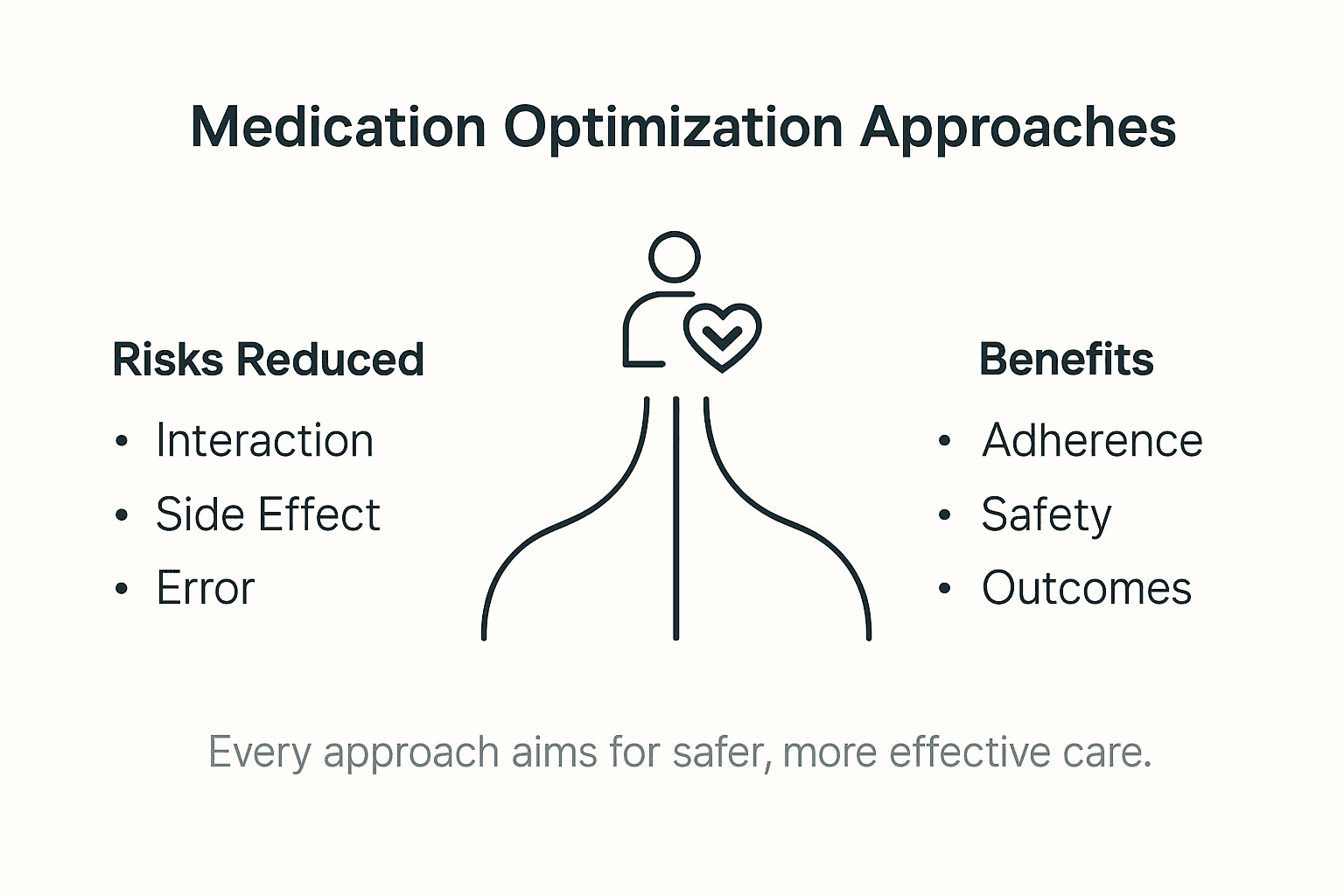
Here is a comparison of the primary medication optimization approaches:
Approach | Collaboration Level | Data Utilization | Typical Benefits |
Collaborative Practice | High (team-based) | Moderate | Integrated care, better communication |
Personalized Review | Moderate | Patient-specific | Tailored regimens, reduced side effects |
Data-Driven Decision Making | Variable | Advanced analytics | Rapid adjustment, informed choices |
Pro tip: Request a comprehensive medication review that considers your complete health profile, including genetic factors and lifestyle considerations, to ensure the most effective and personalized treatment approach.
How Telehealth Platforms Support Optimization
Telehealth platforms have revolutionized medication management by providing sophisticated digital tools that enhance patient care and treatment precision. Advanced informatics tools for medication optimization enable healthcare providers to implement more comprehensive and data-driven approaches to patient treatment across diverse healthcare settings.

These platforms support medication optimization through several key technological capabilities. Clinical decision support systems play a crucial role, offering real-time recommendations that help healthcare providers make more informed prescribing choices. These intelligent systems analyze complex patient data, including medical history, potential drug interactions, genetic factors, and current medications to generate personalized treatment recommendations. Remote monitoring technologies further enhance this approach by allowing continuous tracking of patient health metrics, medication adherence, and treatment responses without requiring in-person visits.
Telehealth platforms integrate multiple advanced features that streamline medication management. These include secure electronic health record access, digital prescription management, automated medication interaction checks, and personalized patient communication channels. By centralizing medical information and creating seamless communication pathways between patients and healthcare providers, these platforms reduce potential errors, improve medication adherence, and enable more responsive, individualized care strategies. The ability to quickly adjust treatment protocols based on real-time patient data represents a significant advancement in personalized healthcare delivery.
Pro tip: Always maintain a digital record of your current medications and keep your telehealth provider updated with any changes in your health status to maximize the effectiveness of your medication optimization process.
Patient Roles and Provider Responsibilities
Medication optimization is a collaborative process that demands active engagement from both patients and healthcare providers. Comprehensive patient engagement standards emphasize the critical importance of shared decision making and mutual accountability in achieving optimal treatment outcomes.
Patients play a pivotal role in medication optimization through several key responsibilities. These include maintaining transparent communication about their medical history, current symptoms, lifestyle factors, and any potential side effects experienced. Medication adherence emerges as a fundamental patient responsibility, requiring consistent follow-through with prescribed treatment plans and proactive reporting of any challenges. Patients must also actively participate in medication reviews, ask informed questions about their treatments, and provide comprehensive information that enables providers to make precise therapeutic recommendations.
Healthcare providers shoulder extensive responsibilities in medication optimization, extending far beyond simple prescription writing. Clinical pharmacists and physicians must conduct comprehensive medication reviews, assess potential drug interactions, monitor patient responses, and continuously adjust treatment strategies. Their responsibilities include leveraging advanced clinical decision support tools, analyzing patient data holistically, and creating personalized treatment protocols that account for individual genetic factors, comorbidities, and lifestyle considerations. Providers must also educate patients about their medications, potential side effects, and the importance of adherence, while maintaining open communication channels that encourage patient feedback and collaborative care.
Pro tip: Prepare a detailed medication journal documenting your current prescriptions, over-the-counter medications, supplements, and any side effects to facilitate more effective communication with your healthcare provider.
Risks, Costs, and Common Mistakes to Avoid
Medication optimization involves complex challenges that demand careful navigation to ensure patient safety and treatment effectiveness. Risks associated with inappropriate medication management can lead to significant adverse events, particularly in high-risk medical environments where precise therapeutic interventions are critical.
Several common mistakes can compromise medication optimization efforts. Polypharmacy represents a primary risk, where patients are prescribed multiple medications that may interact negatively or produce redundant therapeutic effects. Healthcare providers must vigilantly assess each medication’s necessity, potential interactions, and individual patient context. Other critical mistakes include inadequate patient communication, inconsistent medication reviews, and failure to consider individual genetic factors, lifestyle influences, and comprehensive health histories that impact treatment effectiveness.
The financial implications of medication optimization mistakes can be substantial. Inappropriate prescribing, medication errors, and ineffective treatment strategies can result in increased healthcare costs, additional medical interventions, and potential long-term health complications. Patients may face unexpected expenses from treating adverse drug reactions, managing uncontrolled symptoms, or addressing health issues arising from suboptimal medication management. Healthcare systems also bear significant economic burdens when medication optimization protocols are not rigorously implemented, including increased hospitalization rates, extended treatment durations, and complex medical interventions necessitated by initial treatment failures.
The table below highlights risks, costs, and how to avoid common medication optimization mistakes:
Risk/Mistake | Cost Impact | Prevention Strategy |
Polypharmacy | Hospitalization, higher drug costs | Regular medication reconciliation |
Missed Interactions | Adverse health events | Comprehensive review and monitoring |
Inadequate Patient Input | Ineffective treatment | Encourage patient engagement |
Ignoring Genetic Factors | Ineffective therapy | Integrate genetic testing when feasible |
Pro tip: Request a comprehensive medication reconciliation during each healthcare interaction to ensure all your current medications are accurately documented and evaluated for potential interactions or optimization opportunities.
Take Control of Your Medication Optimization Journey with Guppy Meds
Medication optimization requires personalized attention to your unique health profile, continuous monitoring, and expert collaboration. If you’re seeking a simplified telehealth experience that respects these exact principles, Guppy Meds offers tailored treatment plans that align with your needs. Our subscription-based platform delivers FDA-registered medications directly to your home, minimizing risks like polypharmacy and ensuring your medication regimen adapts as your health evolves.

Experience the benefits of convenient, expert-guided medication management with access to solutions focused on longevity and wellness. Start optimizing your health with confidence today by exploring our Longevity | Guppy Meds options or browse through All Products | Guppy Meds to find your perfect match. Visit Guppy Meds now and schedule your virtual consultation to take the first step toward safer, more effective medication optimization.
Frequently Asked Questions
What is medication optimization?
Medication optimization is a strategic approach to personalized healthcare that evaluates and adjusts medication protocols to maximize effectiveness and minimize risks, taking into account individual patient needs and circumstances.
How do telehealth platforms enhance medication optimization?
Telehealth platforms enhance medication optimization by providing advanced digital tools, such as clinical decision support systems, that offer real-time recommendations and allow continuous monitoring of patient health metrics, improving treatment precision and patient care.
What roles do patients play in medication optimization?
Patients play a critical role in medication optimization by maintaining transparent communication with healthcare providers, adhering to prescribed treatment plans, participating in medication reviews, and reporting any side effects or challenges they encounter.
What are common risks associated with medication optimization?
Common risks include polypharmacy, where multiple medications can interact negatively, missed potential drug interactions, inadequate communication from patients, and ignoring individual health factors, all of which can lead to ineffective treatment and increased healthcare costs.
Recommended


Comments