
Complete Guide to Longevity Medications

Updated: Mar 27

Most american adults will face the reality that average life expectancy has barely changed in recent decades, despite medical advances. As new research uncovers ways to target the biology of aging, interest in longevity medications has surged. These treatments go far beyond simply extending years—they aim to improve healthspan, focusing on years lived in good health. Discover how cutting-edge medications and personalized therapies are reshaping what it means to age in america.
Table of Contents
Key Takeaways
Point | Details |
Longevity Medications Target Aging | These medications focus on biological mechanisms like IGF-1 and mTOR to slow the aging process at the cellular level. |
Emerging FDA-Approved Therapies | Therapies such as GLP-1 receptor agonists and metformin show promising potential in promoting longevity and improving healthspan. |
Telemedicine Enhances Access | The telemedicine model streamlines the prescription process for longevity medications, making consultations easier and more convenient. |
Risks and Side Effects Awareness | Potential side effects of longevity therapies require careful monitoring and individualized evaluations to ensure patient safety. |
Defining Longevity Medications and Core Concepts
Longevity medications represent a groundbreaking approach to understanding and potentially slowing human aging processes by targeting specific biological mechanisms. According to research from arXiv, these medications focus on critical molecular pathways that influence aging, including key regulatory systems like IGF-1, mTOR, AMPK, and Klotho.
The emerging field of longevity medicine goes beyond traditional disease treatment, instead concentrating on proactively managing biological aging at the cellular level. Research from arXiv introduces an innovative network medicine framework that identifies existing drugs capable of modulating aging processes. This approach represents a paradigm shift from reactive healthcare to preventative intervention, allowing medical professionals to potentially intercept age-related decline before chronic conditions manifest.
Core concepts in longevity medications typically revolve around several key strategies:
Cellular Repair Mechanisms: Targeting processes that help damaged cells regenerate and function more efficiently
Metabolic Optimization: Regulating systems that control energy production and cellular metabolism
Inflammation Reduction: Mitigating chronic low-grade inflammatory responses associated with aging
Hormonal Balance: Supporting optimal hormonal function that naturally declines with age
By understanding these fundamental principles, researchers are developing sophisticated interventions that could dramatically extend human healthspan - the period of life spent in good health. Longevity Therapy Explained: Benefits, Types, and Safety provides additional context for individuals interested in exploring these cutting-edge medical approaches.
Popular Types of FDA-Approved Longevity Therapies
FDA-approved longevity therapies represent a cutting-edge approach to managing age-related health challenges and potentially extending human healthspan. According to Fortune, several medications have emerged as promising candidates for promoting longevity, with GLP-1 receptor agonists, bisphosphonates, and metformin leading the way in scientific research and clinical applications.
One remarkable example of targeted longevity intervention is Elamipretide, recently approved by the FDA in September 2025. This breakthrough medication specifically improves muscle strength in individuals with Barth syndrome, demonstrating how precision medicine can address age-related physiological decline. The development of such therapies signals a transformative shift from traditional reactive healthcare to proactive, personalized medical interventions.
Key FDA-approved longevity therapies include:
GLP-1 Receptor Agonists: Medications initially developed for diabetes management that show promising anti-aging effects
Metformin: A diabetes drug being studied for its potential to slow aging processes
Bisphosphonates: Primarily used for bone health, with emerging research on broader longevity benefits
Elamipretide: Targeting specific genetic conditions and muscle strength maintenance
Those interested in exploring the broader context of these groundbreaking therapies can find comprehensive information in our Longevity Therapy: Everything You Need to Know resource, which provides an in-depth overview of current medical advancements in the field of longevity medicine.
How Longevity Medications Work in the Body
Longevity medications function through complex biological mechanisms designed to slow aging processes and optimize cellular health. These interventions target fundamental physiological systems that contribute to age-related decline, essentially reprogramming how our bodies manage cellular repair, metabolism, and energy production.
According to Wikipedia’s research on caloric restriction mimetics, some longevity medications work by mimicking the anti-aging effects of caloric restriction. Caloric restriction mimetics like resveratrol can modulate critical metabolic and cellular pathways associated with extended lifespan, triggering similar biological responses that occur during reduced calorie intake without actually restricting food consumption.
The primary mechanisms of longevity medications include:
Cellular Repair Activation: Stimulating DNA repair processes and reducing accumulated cellular damage
Metabolic Optimization: Improving mitochondrial function and energy efficiency
Inflammation Reduction: Decreasing chronic inflammatory responses that accelerate aging
Hormonal Rebalancing: Restoring optimal hormone levels that naturally decline with age
Oxidative Stress Management: Neutralizing free radicals and protecting cellular structures
Individuals seeking a deeper understanding of these intricate biological interventions can explore our comprehensive Longevity Therapy: Everything You Need to Know resource for more detailed insights into how these groundbreaking medications interact with human physiology.
Telemedicine Access and U.S. Prescription Process
Telemedicine has revolutionized healthcare access, particularly for longevity medications, by streamlining the prescription process and making specialized medical consultations more convenient and efficient. Patients can now connect with licensed healthcare providers from the comfort of their homes, eliminating traditional barriers of geographic location and time constraints.
According to Reuters, the FDA has introduced a groundbreaking new approval pathway for personalized treatments. This innovative approach allows drug approvals based on more limited patient data, potentially accelerating access to cutting-edge longevity medications and transforming the telemedicine prescription landscape.
The typical telemedicine prescription process for longevity medications involves several key steps:
Initial Online Consultation: Complete a comprehensive digital health questionnaire
Medical Review: Licensed healthcare provider evaluates patient’s medical history and current health status
Personalized Treatment Plan: Customized medication recommendations based on individual health profile
Prescription Issuance: Digital prescription sent directly to a licensed pharmacy
Medication Delivery: Medications shipped securely to the patient’s preferred address

Patients interested in understanding the nuanced details of obtaining longevity medications through telemedicine can explore our GLP-1 Prescription Process: Step-by-Step Telehealth Guide for a comprehensive overview of the process.
Risks, Side Effects, and Safety Considerations
Understanding the potential risks and side effects of longevity medications is crucial for making informed healthcare decisions. While these treatments offer promising benefits, patients must be aware of potential physiological responses and individual variations in medication tolerance.
According to research on Elamipretide, longevity therapies can produce side effects ranging from mild to moderate, with injection site reactions being among the most common experiences. Comprehensive medical evaluation and ongoing monitoring are essential to mitigate potential adverse responses and ensure patient safety.
Potential side effects and safety considerations for longevity medications include:
Physiological Adaptations: Initial bodily adjustment periods that may cause temporary discomfort
Metabolic Interactions: Potential changes in hormone levels or metabolic processes
Individual Variability: Unique genetic factors that influence medication response
Potential Contraindications: Specific health conditions that might limit treatment suitability
Monitoring Requirements: Need for regular medical check-ups and comprehensive health assessments
Patients seeking additional insights into medication safety can explore comprehensive information through our Efectos Secundarios de Péptidos: Guía Esencial 2024 resource, which provides detailed guidance on understanding potential side effects.
Longevity Treatments Versus Alternative Approaches
The landscape of aging interventions has dramatically expanded, offering multiple strategies beyond traditional pharmaceutical approaches. Patients now have diverse options for addressing age-related physiological changes, ranging from targeted medical treatments to holistic lifestyle modifications.
According to research on senolytics, emerging alternative treatments like senolytic therapies represent a groundbreaking approach to aging. These innovative interventions specifically target and eliminate senescent cells, offering a fundamentally different mechanism compared to conventional longevity medications by directly addressing cellular aging at its core.
Key comparative approaches to longevity include:
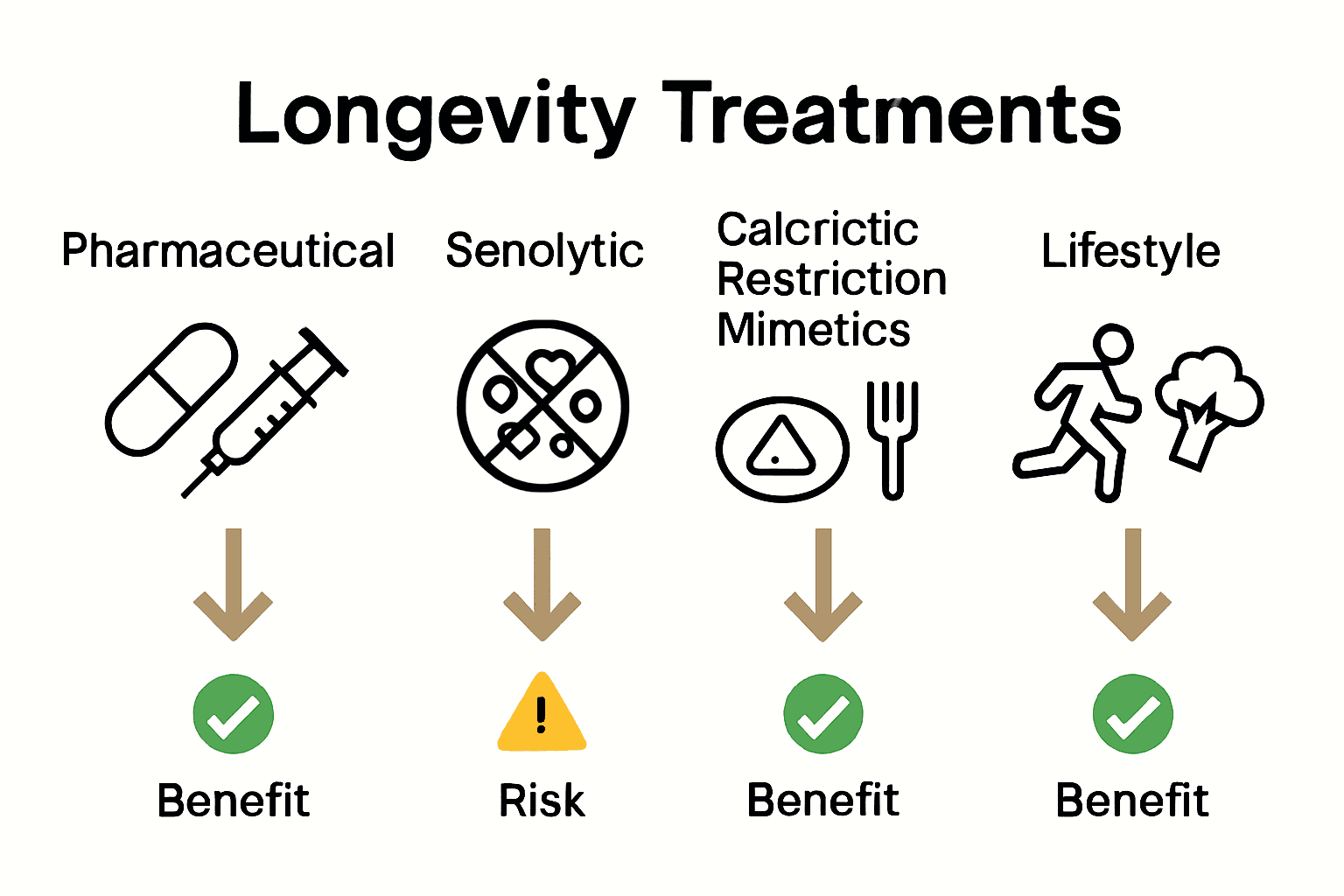
Pharmaceutical Interventions: Targeted medications designed to modify biological aging processes
Senolytic Therapies: Cellular elimination of aged, non-functional cells
Caloric Restriction Mimetics: Medications that replicate metabolic benefits without dietary changes
Lifestyle Modifications: Nutrition, exercise, and stress management strategies
Genetic Optimization: Emerging genetic therapies targeting longevity-associated genes
For individuals seeking deeper insights into comprehensive longevity strategies, our Longevity Therapy: Everything You Need to Know resource provides an extensive overview of current and emerging approaches to extending healthspan.
Unlock Longer Healthspan with Trusted Longevity Medications
The journey to slowing the aging process and enhancing your vitality starts with understanding targeted longevity therapies. Many people face challenges like chronic inflammation, hormonal imbalances, and declining cellular repair that the latest longevity medications aim to address. By leveraging breakthroughs in metabolic optimization and hormonal balance, you can take control of your health and extend the years of well-being.
At Guppy Meds, we make it simple to access these advanced treatments through our streamlined telemedicine platform. Explore personalized longevity options in our Longevity | Guppy Meds category where licensed providers craft plans designed around your unique needs. Whether you are interested in peptides that support healing or metabolic therapies, our FDA-registered pharmacy ensures quality and safety delivered directly to your door.
Don’t wait to optimize your healthspan. Visit Guppy Meds today to schedule your virtual consultation and start your personalized longevity journey. Discover how easy and private it is to integrate proven longevity medications into your life with expert guidance and monthly subscription options. Take the first step toward aging with strength and vitality now.
Frequently Asked Questions
What are longevity medications?
Longevity medications are a new class of treatments aimed at targeting biological mechanisms of aging, with the goal of slowing down the aging process and enhancing healthspan by addressing cellular repair, metabolism, inflammation, and hormonal balance.
How do FDA-approved longevity therapies work?
FDA-approved longevity therapies work by targeting specific molecular pathways related to aging, such as stimulating cellular repair, optimizing metabolism, and reducing chronic inflammation, thus potentially extending overall health and lifespan.
What potential side effects should I be aware of when using longevity medications?
Potential side effects of longevity medications can range from mild to moderate and may include injection site reactions, metabolic changes, and unique individual responses. Regular medical evaluations are recommended to monitor and manage any adverse effects.
How can telemedicine improve access to longevity medications?
Telemedicine enhances access to longevity medications by allowing patients to complete online consultations, receive personalized treatment plans, and have prescriptions sent directly to pharmacies, all from the comfort of their homes.
Recommended


Comments