
Why Trust Telemedicine Providers: Safety and Access

Updated: Apr 14
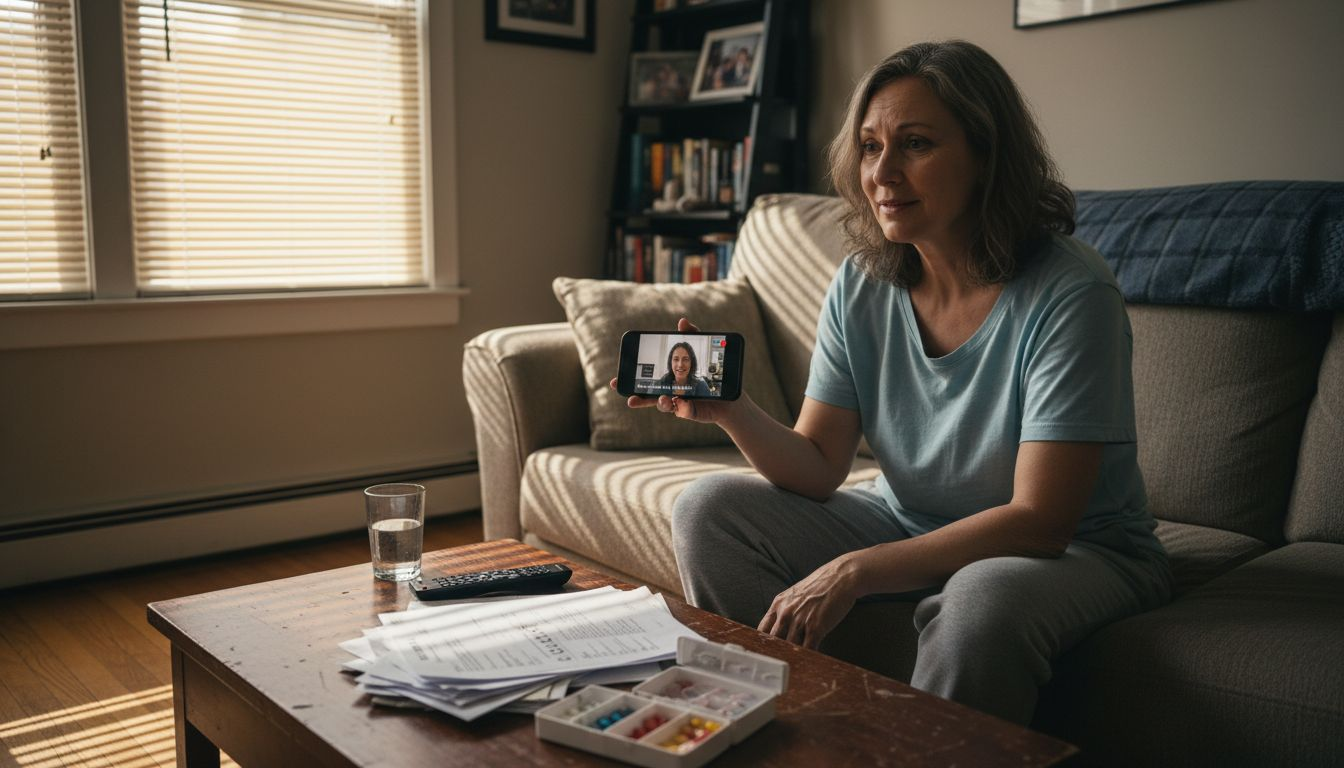
More than 60 percent of American adults say convenience drives their healthcare choices, yet traditional clinics rarely fit a busy schedule. When privacy and efficiency matter most, telemedicine stands out as a powerful way for American professionals to access trustworthy weight management and sexual health solutions without upending daily routines. Understanding what telemedicine really offers cuts through common myths and puts control of health back in your hands.
Table of Contents
Key Takeaways
Point | Details |
Telemedicine Effectiveness | Telemedicine offers significant benefits, such as increased accessibility and convenience, while complementing traditional in-person care. |
Service Types | The main types of telemedicine services include interactive services, store-and-forward, and remote patient monitoring, each serving specific patient needs. |
Provider Qualifications | Ensuring that telemedicine providers meet legal and professional standards is essential for safe and effective healthcare delivery. |
Privacy and Security | Robust privacy and cybersecurity measures are critical in maintaining patient confidentiality during telemedicine consultations. |
Defining Telemedicine: Core Concepts and Misconceptions
Telemedicine represents a transformative approach to healthcare delivery that leverages digital communication technologies to provide remote medical services. Research from leading health technology journals highlights how telemedicine has evolved from a niche service to a mainstream healthcare solution, particularly accelerated by the COVID-19 pandemic.
At its core, telemedicine involves using telecommunications tools to diagnose, treat, and monitor patients without requiring their physical presence in a medical facility. This approach encompasses video consultations, remote monitoring technologies, digital prescription services, and electronic health record management. Unlike traditional healthcare models, telemedicine breaks geographical barriers, allowing patients to access specialized medical expertise regardless of their location.
Common misconceptions about telemedicine often stem from concerns about quality and comprehensiveness of care. However, modern telemedicine platforms like Guppy Meds employ licensed healthcare providers who conduct thorough virtual assessments, ensuring patients receive personalized and professional medical attention. These platforms integrate robust screening processes, secure communication channels, and comprehensive medical protocols to deliver safe and effective healthcare solutions.
Pro Tip: When exploring telemedicine services, always verify the credentials of healthcare providers and understand the specific scope of services offered to ensure a seamless and trustworthy medical experience.
Types of Telemedicine Services and Key Features
Telemedicine services encompass a diverse range of digital healthcare delivery models designed to provide comprehensive medical support remotely. According to professional health research, these services can be categorized into several specialized types that address different patient and clinical needs.
Three primary types of telemedicine services dominate the healthcare landscape. Interactive services enable real-time video consultations where patients directly communicate with healthcare providers, allowing for immediate diagnosis and treatment recommendations. Store-and-forward services involve asynchronous medical data transmission, where medical records, images, and test results are securely shared for later expert review. Remote patient monitoring represents the third critical category, enabling continuous tracking of patient health metrics like blood pressure, glucose levels, and heart rate through connected digital devices.
Here is a comparison of the main types of telemedicine services and when each is most effective:
Service Type | Main Use Case | Real-Time Interaction | Example Scenario |
Interactive Services | Immediate diagnosis and treatment | Yes | Video visit for urgent symptoms |
Store-and-Forward | Specialist review of medical data | No | Sending X-rays to radiologist |
Remote Patient Monitoring | Continuous tracking of health metrics | Indirect | Home blood pressure monitoring |
Comprehensive research from global health organizations highlights key features that define effective telemedicine platforms. These include robust technological infrastructure, secure communication channels, comprehensive patient screening processes, and seamless integration with existing healthcare systems. Advanced platforms like Guppy Meds prioritize user-friendly interfaces, stringent privacy protocols, and personalized medical consultations to ensure patients receive high-quality care from the comfort of their homes.
Pro Tip: When selecting a telemedicine service, prioritize platforms that offer multiple service types and demonstrate transparent communication about their medical protocols and provider credentials.
Provider Qualifications and Legal Compliance
Medical provider qualifications form the critical foundation of safe and effective telemedicine services. Comprehensive regulatory research reveals a complex framework of legal requirements that ensure healthcare professionals meet rigorous standards for remote medical practice.
Telemedicine providers must navigate a multifaceted landscape of professional credentialing and state-specific regulations. This involves obtaining appropriate medical licenses, maintaining board certifications, and demonstrating expertise in digital healthcare delivery. Each healthcare professional must prove their ability to conduct thorough virtual assessments, interpret medical data remotely, and provide accurate diagnoses using telecommunications technologies. State medical boards impose strict guidelines that mandate ongoing professional education, verification of medical credentials, and adherence to patient privacy regulations like HIPAA.

Legal compliance in telemedicine extends beyond individual provider qualifications to encompass broader regulatory requirements. Platforms must implement robust security protocols, ensure secure patient data transmission, and maintain comprehensive documentation of medical consultations. Medicare and Medicaid policies play a significant role in defining acceptable telemedicine practices, with specific rules governing reimbursement, patient eligibility, and service delivery standards. Advanced telemedicine providers like Guppy Meds invest heavily in creating comprehensive compliance frameworks that exceed minimum legal requirements, ensuring patients receive safe, professional, and legally sound medical services.
Pro Tip: Always verify a telemedicine provider’s professional credentials and state licensure status before engaging in any virtual medical consultation to ensure legitimate and high-quality healthcare.
Privacy, Security, and Data Protection Standards
Digital healthcare privacy represents a critical concern in telemedicine services. U.S. Department of Health and Human Services regulations establish rigorous standards for protecting electronic protected health information (ePHI) during remote medical consultations, ensuring patient data remains confidential and secure.
Telemedicine platforms must implement comprehensive cybersecurity measures that go beyond traditional medical record protection. This involves advanced encryption technologies, secure communication channels, and multi-factor authentication protocols. Detailed academic research highlights the complex landscape of digital health security, emphasizing the need for robust systems that can prevent unauthorized access, protect patient identities, and maintain the integrity of sensitive medical information. Key security components include end-to-end data encryption, secure cloud storage, and continuous monitoring of potential cybersecurity vulnerabilities.
Compliance with HIPAA regulations extends far beyond technological safeguards. Telemedicine providers must develop comprehensive privacy frameworks that address patient consent, data transmission protocols, and breach notification procedures. This includes training medical staff on privacy best practices, implementing strict access controls, and maintaining detailed audit trails of all patient interactions. Advanced platforms like Guppy Meds invest in cutting-edge security infrastructure that not only meets but exceeds minimum regulatory requirements, providing patients with confidence in the confidentiality and protection of their personal health information.
Pro Tip: Always verify a telemedicine platform’s specific privacy policy and security certifications before sharing personal health information to ensure maximum data protection.
Clinical Safety and FDA-Registered Pharmacy Assurance
Pharmaceutical safety is paramount in modern healthcare delivery, particularly within telemedicine platforms. How medication arrives safely with telemedicine highlights the critical importance of rigorous quality control and regulatory compliance throughout the medication procurement and delivery process.
FDA registration represents the gold standard for pharmacy quality and safety in the United States. Registered pharmacies must adhere to stringent manufacturing protocols, undergo regular inspections, and maintain comprehensive documentation of their production processes. These requirements ensure that medications are prepared under controlled conditions, with precise quality standards that protect patient health. Compound pharmacies play a crucial role in this ecosystem, offering specialized medication preparations that can be tailored to individual patient needs while maintaining the highest levels of pharmaceutical integrity.
Advanced telemedicine platforms distinguish themselves through comprehensive safety protocols that extend beyond basic regulatory compliance. This includes implementing robust medication verification systems, conducting thorough patient medical history reviews, and maintaining direct communication channels between healthcare providers and pharmacists. Platforms like Guppy Meds invest in sophisticated medication management technologies that cross-reference patient information, potential drug interactions, and individual health profiles to minimize risks and optimize treatment outcomes. The combination of licensed medical professionals, FDA-registered pharmacies, and advanced digital health technologies creates a multilayered approach to patient safety.
Pro Tip: Always request detailed information about a telemedicine platform’s pharmacy certifications and medication sourcing processes to ensure you receive safe, high-quality pharmaceutical treatments.
Comparing Telemedicine to In-Person Care Models
Systematic healthcare research reveals that telemedicine and traditional in-person care models each offer unique advantages, creating a complementary healthcare ecosystem rather than a direct replacement. Modern medical delivery recognizes that both approaches serve critical roles in patient care, with telemedicine emerging as a powerful alternative for many medical consultations and treatment strategies.
Telemedicine demonstrates remarkable effectiveness across multiple healthcare domains. Compared to traditional in-person visits, virtual consultations provide significant benefits such as reduced travel time, increased accessibility for patients in remote locations, and greater scheduling flexibility. The American Medical Association’s comprehensive analysis emphasizes that while telemedicine cannot completely replace physical examinations, it excels in managing chronic conditions, providing follow-up care, mental health consultations, and initial diagnostic assessments. Key differences between the two models include technological mediation, consultation duration, and the depth of physical interaction possible.
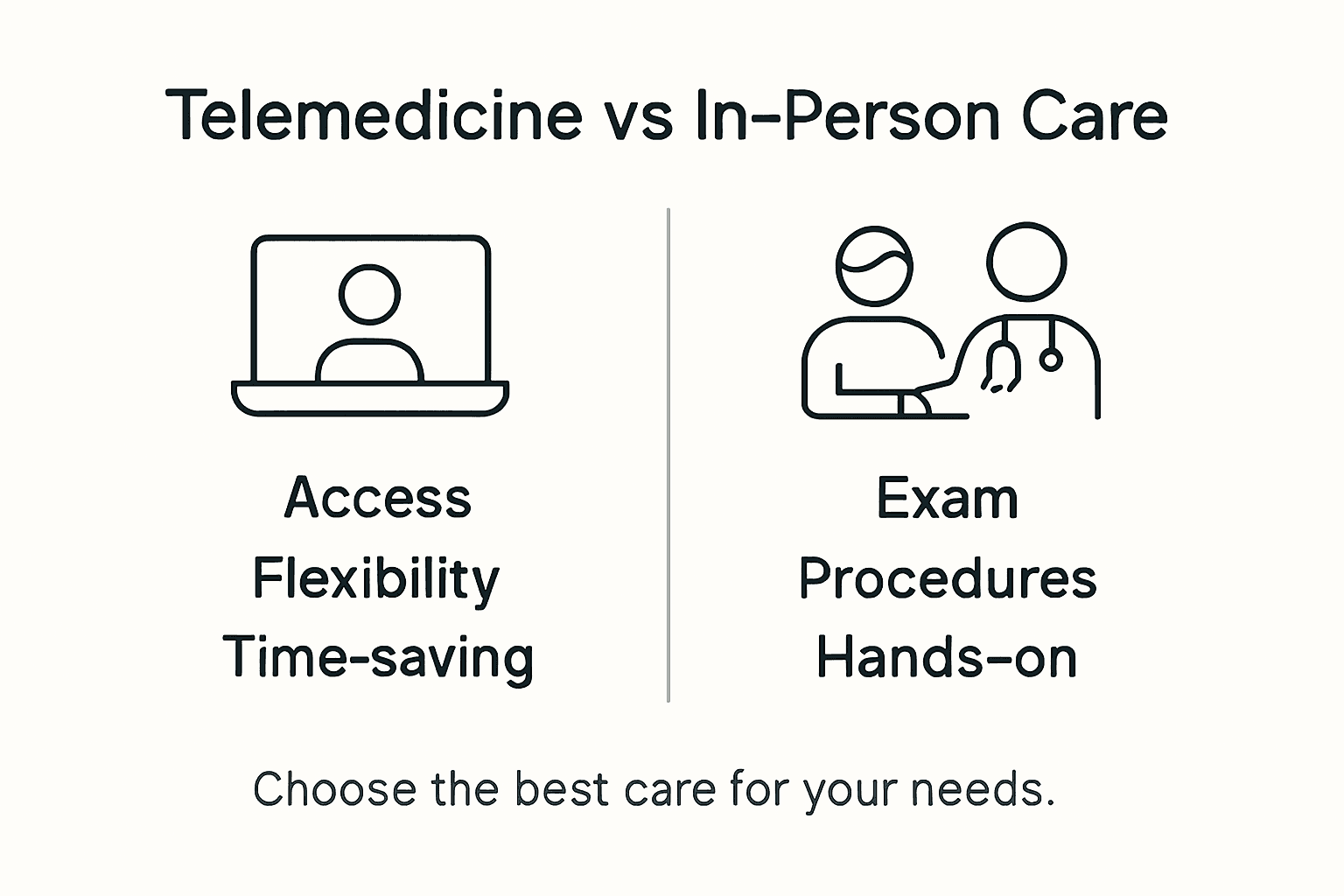
However, telemedicine is not a universal solution. Certain medical scenarios still require in-person interventions, particularly those involving complex physical examinations, surgical consultations, or procedures requiring direct physical contact. Advanced telemedicine platforms like Guppy Meds recognize these limitations, designing their services to seamlessly integrate virtual and traditional care models. By offering comprehensive digital health solutions that can escalate to in-person care when necessary, these platforms ensure patients receive the most appropriate medical attention regardless of the consultation method.
This table outlines key differences between telemedicine and in-person care models:
Factor | Telemedicine | In-Person Care |
Accessibility | Available anywhere with internet | Limited by geographic location |
Physical Examination | Limited, via video or connected devices | Full exam possible |
Convenience | Suitable for routine consults | Essential for complex or urgent cases |
Wait Times | Often shorter and more flexible | May require longer appointments |
Pro Tip: Select telemedicine services that offer clear pathways to in-person care and have established referral networks with local healthcare providers for comprehensive medical support.
Experience Trusted Telemedicine Care with Guppy Meds Today
Navigating safety and access in telemedicine can feel overwhelming. The challenge to find licensed providers who offer secure, personalized care while ensuring privacy and pharmaceutical quality is real. The article underscores key concerns you might share like verifying professional credentials, secure data protections compliant with HIPAA, and assurance from an FDA-registered pharmacy. Guppy Meds addresses these directly by combining thorough virtual consultations with licensed healthcare professionals and dispensing medications through a trusted FDA-registered compound pharmacy.
Enjoy the convenience and confidence of telemedicine that prioritizes your safety. You gain access to tailored treatments in weight loss, sexual health, peptides, and longevity therapies delivered discreetly to your home. By choosing Guppy Meds, you effortlessly bridge the gap between expert medical care and secure medication delivery without the hassle of waiting rooms or travel.
Start your journey with a platform designed for busy individuals who demand privacy, accessibility, and professional excellence.
Ready to experience telemedicine that matches your trust and health goals?
Explore how simple it is to get started with Guppy Meds. Schedule your virtual consultation and discover safe, effective treatments designed for you. Don’t wait for healthcare that fits your pace and privacy. Visit Guppy Meds now to take control of your health securely and conveniently.
Frequently Asked Questions
What qualifications should I look for in a telemedicine provider?
Look for licensed healthcare providers with appropriate medical credentials, board certifications, and expertise in digital healthcare delivery to ensure safe and effective services.
How does telemedicine ensure the privacy and security of my health information?
Telemedicine providers must comply with strict regulations like HIPAA and utilize advanced cybersecurity measures, including encryption and secure communication channels, to protect your personal health information.
What types of services are commonly offered through telemedicine?
Common telemedicine services include interactive video consultations, store-and-forward medical data sharing, and remote patient monitoring for continuous health tracking.
Can telemedicine fully replace in-person visits for all medical concerns?
Telemedicine is effective for many consultations, especially follow-ups and chronic condition management, but some medical situations, such as complex physical exams or emergencies, still require in-person care.
Recommended


Comments